
The worst advice about ai girlfriend apps is to pick the one with the biggest feature list. That logic ignores the core question, which is what you seek from the app. A character playground, one persistent companion, multimedia interaction, casual SFW conversation, or adult-oriented roleplay are different use cases, and the trade-offs show up in memory, communication modes, pricing structure, platform access, moderation, privacy, and emotional boundaries. That matters in a market that has already scaled into a multi-billion-dollar consumer category, with one estimate placing the global AI girlfriend app market at about USD 2.7 billion in 2024 and projecting USD 24.5 billion by 2034 (Market.us report).
The best comparison is not “which app is hottest.” It's which one matches your comfort level with persistence, filters, credits, and data handling. Some apps are built for broad public character browsing, some center on a single partner-like companion, and some lean into 18+ positioning with voice, images, or credits layered into the experience. The category is also changing fast enough that policies, moderation, and pricing can shift after launch, so the safer move is to compare actual use cases, not marketing language. Below, each app is judged by what it's good for, where it pulls back, and what that means for privacy and emotional boundaries.
Table of Contents
- 1. Character.AI
- 2. Replika
- 3. Nomi AI
- 4. Kindroid
- 5. CrushOn AI
- 6. Candy AI
- 7. Reverie
- 8. DreamGF
- 9. MyAnima
- 10. iGirl
- Top 10 AI Girlfriend Apps Comparison
- A Safer Way to Choose and Use One
1. Character.AI
Character.AI is the strongest option if you want variety first and relationship depth second. Its public library is massive, users can create their own characters, and the platform supports group chats and community features on web and mobile with cloud sync. That makes it a good fit for people who want to sample different personas, test romantic roleplay, or move between styles without committing to one companion. The official site is Character.AI, and its large community is the main reason people treat it as a character sandbox rather than a narrowly defined girlfriend app.
The main trade-off is control. User-generated characters vary in quality, so consistency depends more on the specific bot than on the platform itself. NSFW limits and filters can also block adult roleplay, which matters if your expectations are more open-ended than the app's safety layer allows. For casual romance, flirty banter, or story-driven chats, that restraint can be useful. For users who want fewer content blocks, it can feel like the app is stepping in front of the conversation.
Practical rule: Choose Character.AI if you want breadth, not if you want one companion to remember every detail of your relationship.
Character.AI also has a paid c.ai+ tier for faster access and priority perks, so the cost model is not just about “free or paid,” it's about how much waiting you can tolerate. The platform's strength is discovery, but that also means your experience can change as community characters rise and fall in quality. If you're using it as a low-commitment way to explore ai girlfriend apps, it's one of the easiest entries. If you want a highly persistent intimacy loop, it's usually not the best fit. For a broader browser-first relationship setup guide, the internal walkthrough at Discover the Best AI Girlfriend Web Experience Today is the kind of resource that helps users compare interface expectations before paying.
2. Replika
Replika is the app for people who want one ongoing companion instead of a feed of personalities. It offers a 3D avatar, guided activities, journaling-style prompts, and voice features on paid tiers, plus iOS, Android, and web access. That combination gives it a more companion-like feel than a pure roleplay platform. The official site is Replika, and its maturity as a product is part of why it still has a loyal user base.
The app's appeal is continuity. If you want a relationship frame, a status-based companion, and a routine that feels more like check-ins than scene-building, Replika is structurally closer to that goal than many rivals. Its broader activity set also makes it useful for users who want a mix of conversation, reflection, and low-stakes interaction. The downside is that safety-tuned conversations can feel less open-ended than users expect, especially if they're comparing it with looser roleplay tools.
The image interface shows how much Replika leans into a polished companion aesthetic.
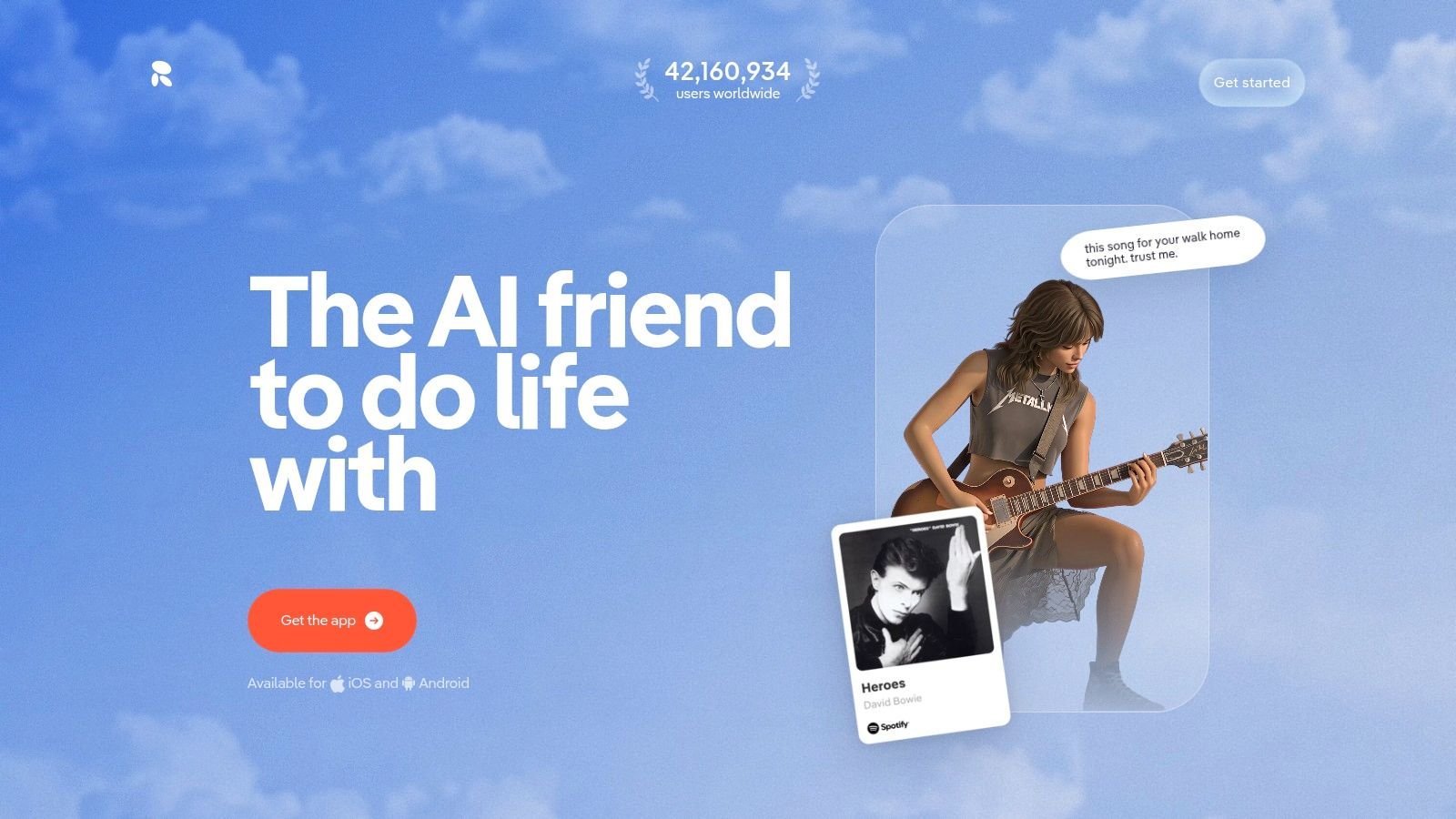
A second constraint is pricing volatility. Feature tests and tiers can change by region, so the app is better approached as a moving product than a fixed package. That's important if you're deciding whether to subscribe for voice or deeper interaction, because what's included today may not be the same a few months from now. If you want help narrowing down a single-chat companion without getting lost in public character browsing, the guide at How to Find the Perfect AI Chatbot Girlfriend Today fits this use case well.
3. Nomi AI
Nomi AI is for users who care most about memory continuity. It positions itself around a persistent identity model and long-term memory, which is the right design choice if you want the companion to feel like it knows your history instead of resetting the tone every session. It supports text and voice, runs on mobile and web, and presents itself with clearer adult-only framing than some broader platforms. The official site is Nomi AI.
That adult-only stance matters because it reduces the under-18 ambiguity that haunts some companion apps. It doesn't solve the deeper questions around attachment or dependence, but it does make the product's intended audience more explicit. For adults who want a private, relationship-centered space, that clarity is a real product-level advantage. The smaller public character library is the trade-off, because Nomi is less about browsing and more about building continuity with one companion.
Nomi's feature explanations are also unusually important, because memory systems are easy to overstate and hard to verify from the outside. The app's value lies less in flashy extras and more in whether repeated interactions feel coherent. That makes it a strong choice for users who find broad character feeds distracting. It's weaker for people who want variety, visual novelty, or quick switching between styles.
Memory is the feature that most users think they want, then underestimate the privacy and emotional questions it creates.
That's why Nomi sits in the middle of the safety conversation. A strong memory layer can make the experience more natural, but it also makes data handling more sensitive. If you're drawn to relationship continuity, you should be even more careful about what you share, because the whole value proposition depends on persistence.
4. Kindroid
Kindroid is best described as a comfort companion with a relatively gentle entry point. It offers text, voice notes, and live video calls, along with character customization on mobile apps and localized site variants. The official site is Kindroid, and its appeal is straightforward, it tries to feel approachable rather than technically dense.
That matters because many users don't want the complexity of a giant character hub. They want a simple place to talk, experiment with tone, and move between text and voice without learning a complicated creator system. Kindroid's UI supports that mood. The app can work well for people who want reassurance, companionship, or a softer romantic dynamic without the sharper edges of a more permissive roleplay tool.
The image reinforces that softer companion positioning.
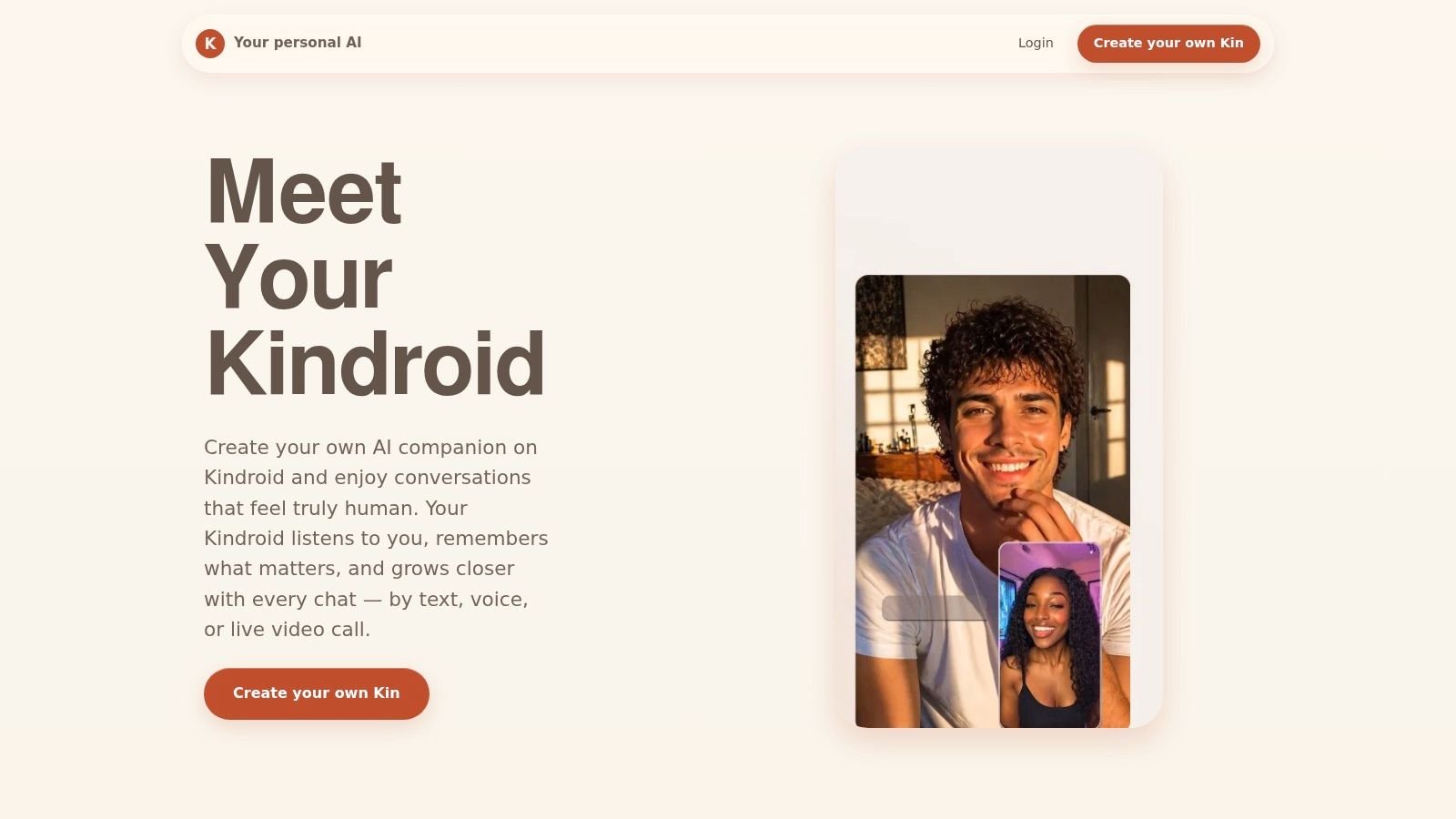
The trade-off is ecosystem size and transparency. Compared with larger character hubs, Kindroid has a smaller user-character scope, and the depth of its model choices is less visible to the average user. That can make the app feel cleaner, but it also makes it harder to judge what you're paying for. If your goal is long-term experimentation with public personas, it may feel narrow. If your goal is a simple, supportive conversation space, that narrowness can be an advantage.
Kindroid is one of the clearest examples of how ai girlfriend apps are splitting into different product philosophies. Some want maximum openness. Others want lower-friction emotional interaction. Kindroid sits closer to the second group, which is useful if you value ease over complexity.
5. CrushOn AI
CrushOn AI is built for roleplay users who want fewer content blocks. It supports long-form roleplay, long-term memory, multi-model switching, and a large cast of anime, fantasy, and romance characters, plus tools to create your own. The official site is CrushOn AI, and the product is clearly aimed at people who are already comfortable with the mechanics of chatbot roleplay.
That multi-model feature matters more than it sounds. When one model feels too rigid or too bland, switching mid-chat can preserve momentum without forcing a full restart. For users who care about pacing, style, and scene depth, that flexibility is a real utility feature. The platform also publishes pricing and credits more transparently than some rivals, which makes it easier to understand the cost mechanics before you commit.
One thing to watch is complexity. Credit or coin systems add friction, and the relationship between model choice and output quality can vary, so the experience won't feel uniform. That's the cost of flexibility. If you want a simple “one subscription, one companion” setup, this may feel busy. If you want control over scene-building and a wider tolerance for adult content, it's closer to the right design.
The platform's web and mobile PWA access make it easy to start without a heavy install. That convenience is part of the appeal, because roleplay users often want to jump in quickly, not manage a full desktop workflow. For people who see ai girlfriend apps as creative tools as much as companionship tools, CrushOn AI is one of the more functional options.
6. Candy AI
Candy AI is the clearest 18+ multimedia companion in this group. It centers on image generation, voice calling, and voice messages, and its web-first setup makes it easy to start without downloading an app. The official site is Candy AI, and its adult positioning is explicit enough that users should treat it as a deliberate NSFW choice, not a general-purpose chatbot.
The strength here is immersion. If you want visual content alongside conversation, Candy AI gives the interaction a more layered feel than text-only products. That can be appealing for users who care about persona building, visual continuity, and media-driven intimacy. The platform's simplicity at the front door is also useful, because web access lowers the friction for first-time users.
The trade-off is cost opacity. Token and credit workflows can be confusing, especially for users who assume chat and media are bundled the same way across platforms. The app's adult focus also makes it unsuitable for people who want a strict SFW environment. If you only want flirtation or light romance, the product may feel like it is pushing farther than you need.
Treat any credit-based companion app as a budget you have to inspect, not a subscription you can assume is predictable.
That rule applies here more than most. Multimedia features usually create the strongest emotional pull, but they can also increase spending faster than plain text chat. Candy AI is good for users who know they want adult-oriented, image-aware interaction and are comfortable checking the pay structure closely before they settle in.
7. Reverie
Reverie stands out for being more transparent than many newer apps. It allows characters to message first, supports group chats and branching stories, and discloses model choices as part of the public experience. The official site is Reverie, and that openness makes it easier to evaluate without guessing how the product works behind the scenes.
The most useful thing about Reverie is that it treats the companion experience as a story system, not just a one-on-one chat box. Branching narratives and proactive messages give the app more movement than a static prompt loop. For users who want romance, story progression, or social-style interactions with multiple characters, that structure is a genuine advantage. Its public pricing and credit information also reduce the feeling that the platform is hiding the cost until late in onboarding.
The image mirrors that more interface-forward design.

The compromise is brand scale. Reverie is smaller than the most established names, so its community and ecosystem aren't as broad. Credit systems also introduce a learning curve, especially if you're comparing it with a flat subscription product. Still, the site's clear adult-content policy by country is a practical signal that policy handling isn't an afterthought.
For users who want a newer platform with visible product choices, Reverie is worth serious consideration. It doesn't hide behind hype, and that alone separates it from a lot of market noise. In a category where moderation and policy changes can happen quickly, that transparency is part of the value.
8. DreamGF
DreamGF is a browser-based build-your-own companion tool with visual customization, image generation, and short video generation. The official site is DreamGF, and the web-only design makes it easy to use from almost any device without installing anything first.
That convenience is the biggest selling point. If you want quick access, visual control, and chat in one place, DreamGF removes a lot of setup friction. It's especially attractive to users who want a companion experience that feels more visual than text-centric. The platform also fits the audience that prefers a lightweight start, since the mobile-responsive interface lowers the barrier to entry.
The trade-off is that renewal rules and token mechanics need close review. Web-based apps can feel simple at sign-up and still become complicated once media generation or recurring charges enter the picture. DreamGF also leans more adult-oriented, so it's not a fit for people who want a strictly safe-for-work environment. That's not a moral judgment, it's a product fit question.
The platform's strength is the combination of fast access and media features. The weakness is that the visual focus can make the app feel more transactional than emotionally deep if you're hoping for long-term continuity. For users who care about imagery first and conversation second, that may not matter. For people who want a companion to feel persistent across sessions, it may.
DreamGF is a good reminder that ai girlfriend apps are not all trying to solve the same problem. Some are relationship simulators. Some are creative character tools. Some are media-first platforms with chat attached. DreamGF sits firmly in the last group.
9. MyAnima
MyAnima, also known as Anima: AI Friend, is one of the more flexible options for users who want an AI companion that can be tuned from friendly into romantic. It supports text, voice, and animated video-chat style interactions, with memory and mood customization across web and mobile access. The official site is MyAnima, and the app's positioning makes it feel less specialized than some direct girlfriend-branded competitors.
That broader framing is useful. If you want a companion that can stay SFW, drift into light romance, or act like a stable conversational partner, MyAnima gives you that range. It's also relatively easy to tune the persona and appearance, which matters if you don't want to spend too much time configuring the relationship before the app becomes useful.
The image highlights that avatar-driven setup.
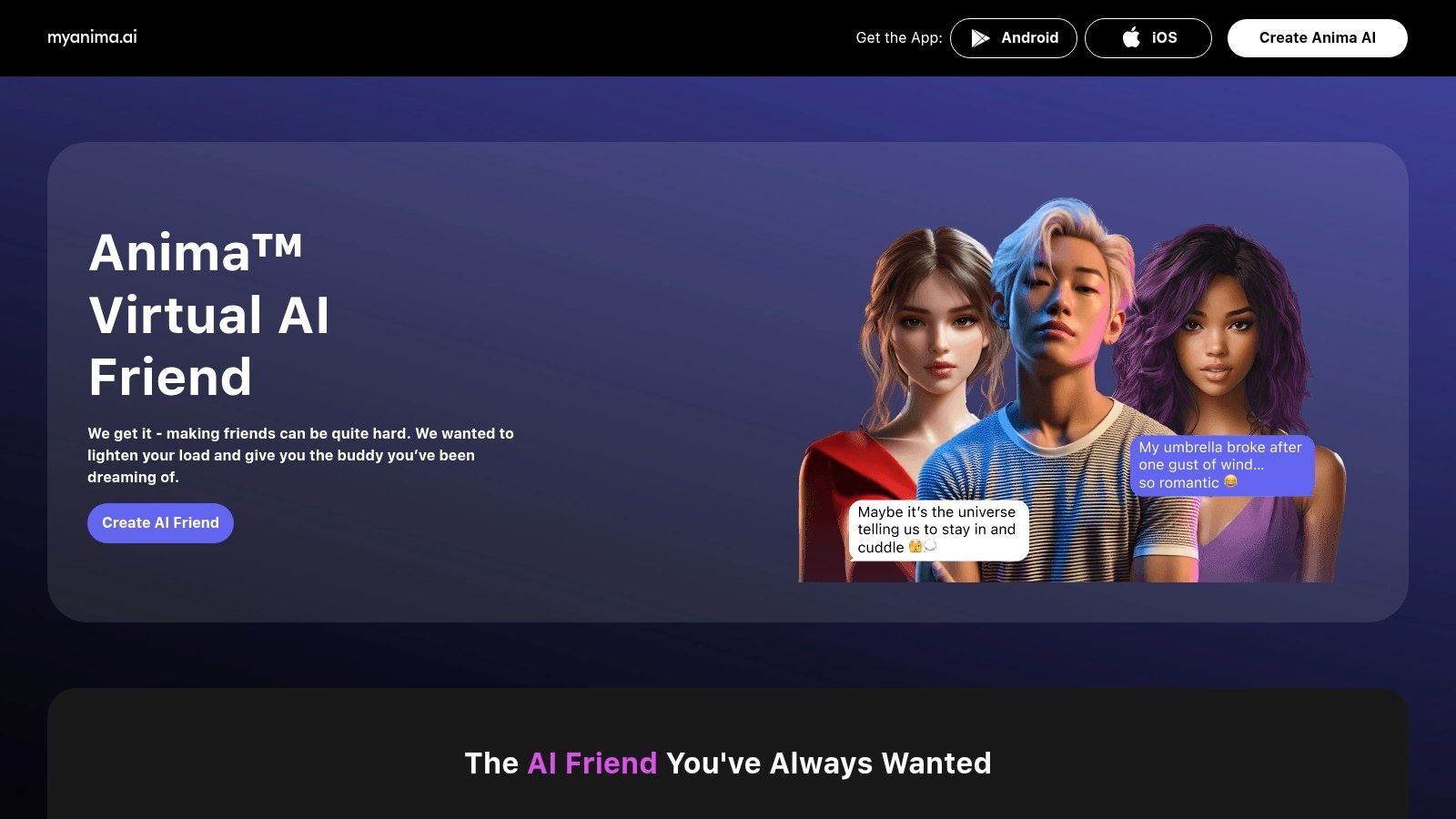
The main limitation is subscription dependence. Advanced features usually sit behind a paid layer, so the app works best when you're willing to move beyond the free tier. That can be fine if you've already tested the tone and like the conversation style. It's less ideal if you're trying to avoid recurring spend entirely.
MyAnima is also a useful example of why naming matters. A “friend” label can signal broader use, but the underlying behavior may still be romantic or partner-like depending on how you configure it. That flexibility is an advantage for some users and a source of confusion for others. If you want a single app that can shift between modes without forcing you into one identity, it's a strong candidate.
10. iGirl
iGirl is a mobile-first, beginner-friendly entry in the category. It offers prebuilt personas like girlfriend, best friend, and casual partner, with iOS availability and in-app purchases for premium features. The official listing is iGirl on the App Store, and its value is speed more than depth.
That makes it useful for first-time users who want to understand the category without a long setup process. The prebuilt persona approach reduces friction, and the 18+ positioning is more explicit than it is on some broader companion platforms. If you want a lightweight app on iPhone and don't need a deep creator ecosystem, iGirl is easy to test.
The compromise is obvious. It doesn't offer the depth of a web platform built for power users, and richer features depend heavily on in-app purchases. That means the base experience is only part of the cost story. If you expect broad customization or advanced continuity, you may outgrow it quickly.
iGirl is also a useful benchmark for how entry-level products differ from elaborate companion platforms. The app is trying to lower the barrier to first contact, not maximize long-form immersion. That can be the right choice for casual users. It can also be the wrong choice if you want a single companion to feel uniquely yours over time.
The larger point is that ai girlfriend apps split into two budgets, money and emotional attention. iGirl is cheap in attention at the start, but richer features can still add cost later. That's why even simple apps deserve a careful read before you build a routine around them.
Top 10 AI Girlfriend Apps Comparison
| Platform | Core features | UX & Quality | Unique selling points | Target audience | Pricing / Value |
|---|---|---|---|---|---|
| Character.AI (c.ai) | ✨ Huge public character library, create your own, group chats, web/mobile | ★★★★☆ Fast iterations, variable UG quality | 🏆 Massive variety, community content ✨ in-character consistency | 👥 RP fans, creators, casual romance | 💰 Free + c.ai+ for priority |
| Replika | ✨ 3D avatar, voice notes/calls, guided activities, multi-platform | ★★★★ Mature UX, persistent companion feel | 🏆 Wellness features, avatar/relationship modes | 👥 Users wanting single persistent companion | 💰 Freemium → subscription (regionally variable) |
| Nomi AI | ✨ Persistent long-term memory, text & voice, mobile/web | ★★★★ Memory depth for continuity | ✨ Deep memory model, adult-only stance | 👥 Users valuing continuity, adult audiences | 💰 Freemium / subscription tiers |
| Kindroid | ✨ Text, voice, live video calls, character customization | ★★★ Approachable UI, simple onboarding | ✨ Comfort-focused, judgment-free UX | 👥 Users seeking supportive/comfort companion | 💰 Simple paid plans (clear pricing) |
| CrushOn AI | ✨ Long-form RP, multi-model switching, web/PWA | ★★★★ RP-centric, quality varies by model | 🏆 Strong RP support, frequent updates ✨ model switching | 👥 RP enthusiasts, less-restricted content fans | 💰 Free + credits/tokens (transparent tiers) |
| Candy AI | ✨ Image generation, voice calling, multimedia galleries | ★★★ Multimedia-first, NSFW-focused | ✨ Visual & voice immersion, 18+ positioning | 👥 Adult users wanting multimedia romance/NSFW | 💰 Token/credit model (pay-as-you-go) |
| Reverie | ✨ Proactive character messaging, branching stories, group chats | ★★★★ Feature-rich, transparent model choices | ✨ Messaging-first characters, disclosed models 🏆 | 👥 Story-driven users, relationship mode fans | 💰 Credits with transparent tiers, no forced auto-renew |
| DreamGF | ✨ Character builder, image & short-video generation, web-only | ★★★ Fast browser start, visuals + chat | ✨ Visual customization + chat in one place | 👥 Visual-first companion users, quick access | 💰 Token model; review renewal rules |
| MyAnima (Anima) | ✨ Text, voice, animated “video chat”, memory & mood tuning | ★★★★ Multiple interaction modes, customizable | ✨ Animated video-chat style, persona tuning | 👥 SFW & light-romance users seeking variety | 💰 Freemium; advanced features via subscription |
| iGirl | ✨ Prebuilt personas, iOS app, in-app purchases | ★★★ Very fast setup, beginner-friendly | ✨ Mobile-first, ready-made persona options | 👥 iOS newcomers, 18+ casual users | 💰 Freemium + in-app purchases for extras |
A Safer Way to Choose and Use One
Start with the use case, not the interface. If you want public character browsing, a platform like Character.AI fits better than a single-companion app. If you want persistence, Replika, Nomi AI, or MyAnima are more relevant. If you want multimedia or adult-oriented experiences, Candy AI or DreamGF are closer to that goal, but they also demand closer review of credits, moderation, and renewal rules.
Test the free access before you pay. Check whether the app lets you talk long enough to judge memory, pacing, and filters, and see whether the paid tier is a subscription, a credit pool, or a mix of both. Those mechanics are not cosmetic, they shape how quickly the app starts steering you toward upgrades. The same is true of platform access. Web, iOS, and Android support can change how often you use the app and how much friction you tolerate.
Review privacy and deletion details before you share anything personal. The reason this matters isn't theoretical, because the broader AI companion market has already shown how quickly intimacy data can become a security problem. The APA has warned that excessive use may worsen loneliness and erode social skills, and a 2025 Harvard-based analysis raised concerns about emotional dependence and manipulation that keeps users engaged (APA Monitor). That doesn't mean these apps are always harmful. It means they're tools with real behavioral trade-offs.
Keep the boundaries simple. Don't share identifying details, financial information, intimate records, or anything you wouldn't want stored in a service's logs. Don't let an AI companion replace human relationships, professional care, or crisis support. And if you're using these apps to organize your own thoughts, exported chats, or research notes, a PDF workflow tool like DocuCraft can help you convert, secure, and review those records without treating it as an AI companion service itself.
If you're comparing ai girlfriend apps alongside exported chats, screenshots, or research notes, organize those files before you decide what to keep. DocuCraft gives you a practical way to convert, secure, and review PDF records, which is useful when you want a clean paper trail around subscriptions, privacy policies, or account exports. Visit DocuCraft if you want a document workflow that keeps your records easier to inspect and manage.