
You've probably hit the same fork in the road as everyone else shopping for a girlfriend AI app. You want something that feels continuous and personal, but you're not sure whether that means persistent memory, more freedom in roleplay, voice notes, visual customization, or just a simple app that doesn't make you fight the interface. The best girlfriend AI apps are not interchangeable, and treating them that way usually leads to disappointment.
This roundup compares 10 distinct options through the criteria that matter in daily use, conversation continuity, customization, voice and multimedia presence, content boundaries, pricing clarity, platform access, privacy questions, and fit for different users. It also keeps the safety lens open, because companion apps can simulate intimacy and support, but they aren't a replacement for human relationships or professional care. The market around these products is already large enough to sustain serious competition, with industry summaries placing AI companion and girlfriend-style apps in the multi-billion-dollar range and counting over 220 million global downloads by 2025 in the broader category (market overview).
A practical way to read this list is simple. If you want a mainstream relationship-style app, start with Replika. If you want the biggest public character universe, look at Character.AI. If you care most about memory and continuity, Nomi is the cleaner bet. If you want heavier customization or more flexible boundaries, DreamGF and CrushOn.AI deserve a look. If you want voice or video presence, Kindroid is the one to compare carefully.
Table of Contents
- Replika
- Character.AI
- Nomi
- Paradot
- Anima
- Chai
- CrushOn.AI
- DreamGF
- Romantic AI
- Kindroid
- Top 10 Girlfriend AI Apps Comparison
- Match the App to Your Boundaries and Routine
Replika

Replika still feels like the safest starting point for people who want a relationship-style companion without diving into niche features first. It has a mature app ecosystem, structured activities, guided prompts, avatar customization, and voice messages or background calls, so it behaves more like a full companion product than a bare chat window. The company positions it around emotional support and ongoing interaction, which makes the experience feel intentional rather than improvised.
What it does well
The strongest part of Replika is its broad, polished feature set. You can use relationship-style modes, including partner-like interactions, while also leaning on journaling-style prompts and guided conversations when you want the app to feel more grounded. It's also one of the better picks for someone who wants a mainstream experience that doesn't require learning a lot of setup logic first.
The trade-off is familiar to anyone who has used companion apps for a while. Pricing and tiers can vary by country and platform, and the content filters can feel stricter than some users expect. Some people also report inconsistency in how the model responds over time, which matters if you're using the app for continuity rather than novelty.
Practical rule: choose Replika if you want a companion app that feels established and widely supported, not the loosest or most experimental option.
For readers comparing app ecosystems and support resources, the broader view is covered well in this AI girlfriend apps category guide, which is helpful if you're trying to map mainstream options before subscribing. Start with the Replika website if you want to check the current app flow, onboarding, and any in-app plan details before committing.
Character.AI
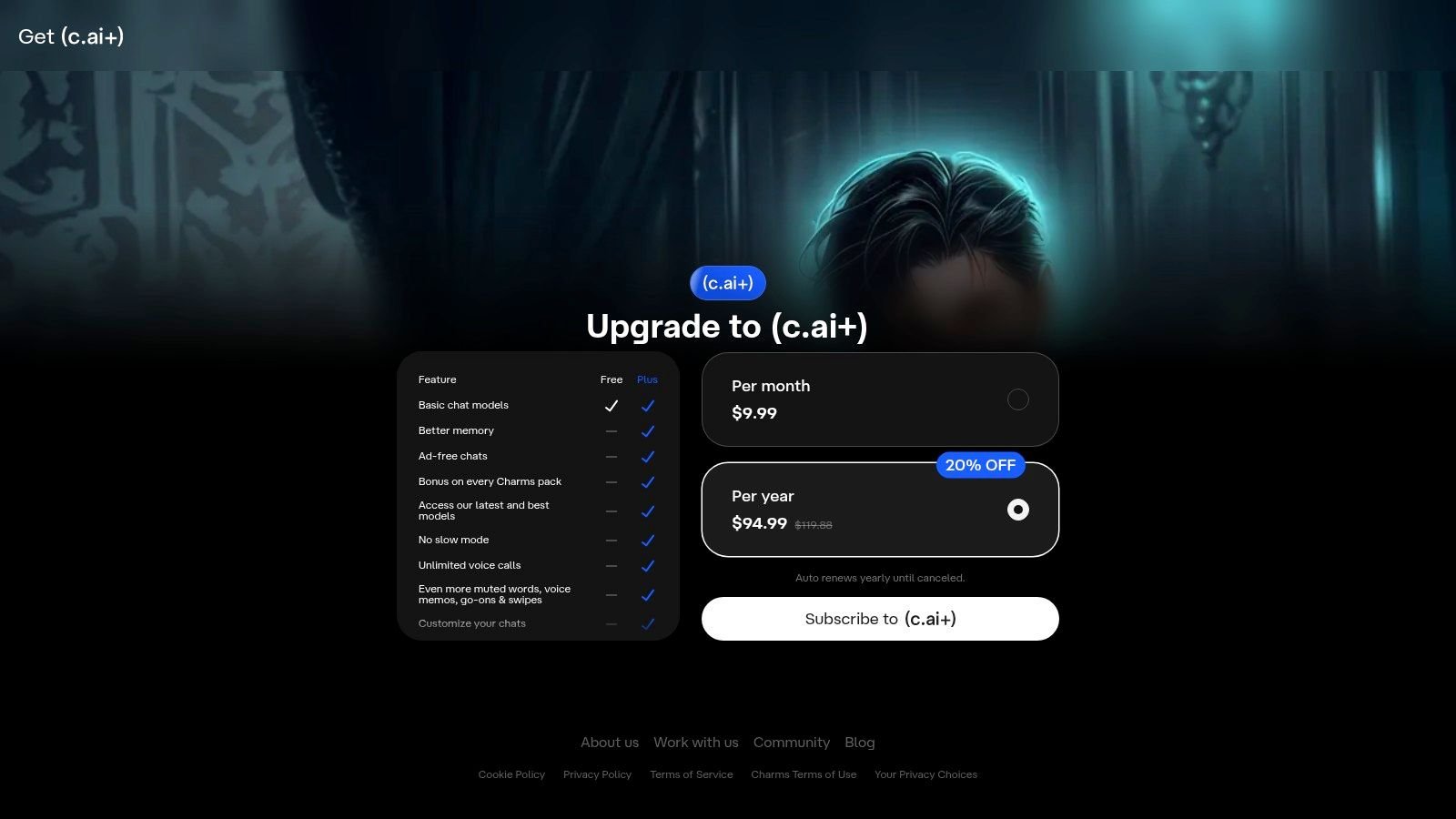
Character.AI is the best fit if your idea of a girlfriend AI app is really a public character playground with romance as one of many possible uses. It offers a huge library of user-created bots, tools to build your own, voice features, and group chats, so it's less about a single companion and more about discovering personalities. The experience can be fun immediately because there's so much to browse.
Where it stands out
The biggest strength here is breadth. If you like trying different companions, switching tones, or sampling fan-made characters, Character.AI gives you more surface area than most rivals. The paid Plus plan is also relatively easy to understand because it focuses on faster responses, priority access, and removing slow mode, which makes the upgrade logic clearer than many token-based systems.
The main limitation is the one power users feel fast. Memory depth can be hit-or-miss, especially for longer roleplay or relationship continuity, and the platform is stricter about content boundaries than NSFW-friendly alternatives. That makes it less ideal if you want the app to stay in one emotional lane for long sessions.
Character.AI is strongest when you treat it like a social character library, not a single-partner simulator.
If you want to see how the platform frames its subscription access, go straight to the Character.AI subscription page. For a more hands-on comparison of realism-oriented chat experiences, the realistic chat experiences guide adds useful context before you decide whether Character.AI's broader sandbox is enough for you.
Nomi

Nomi is the app to look at when continuity matters more than a giant character catalog. It's built around one or more companions that feel persistent, memory-forward, and proactive, which gives the relationship more of an ongoing shape. The design leans private and focused, so you're not constantly pulled into discovery feeds or a crowded marketplace.
Why people choose it
Nomi's appeal is its alive-feeling interaction style. The app emphasizes memory, proactive pings, voice notes, and calls, and it supports multiple companions if you want to separate different relationship threads. That makes it a strong fit for users who want the companion to remember the last conversation and return to it naturally.
The drawback is that Nomi can be less transparent on pricing before checkout, depending on platform and region. Its feature cadence can also differ between web and mobile, so the experience may not look identical everywhere. If you want a broad marketplace or heavy experimentation, this may feel too focused.
Best fit
Nomi suits people who want a private, relationship-first companion that doesn't feel like a novelty toy. It's also a sensible choice for users who care more about model consistency than about raw feature volume. Check the Nomi website directly to see how its current onboarding, voice features, and app availability line up with your routine.
Paradot
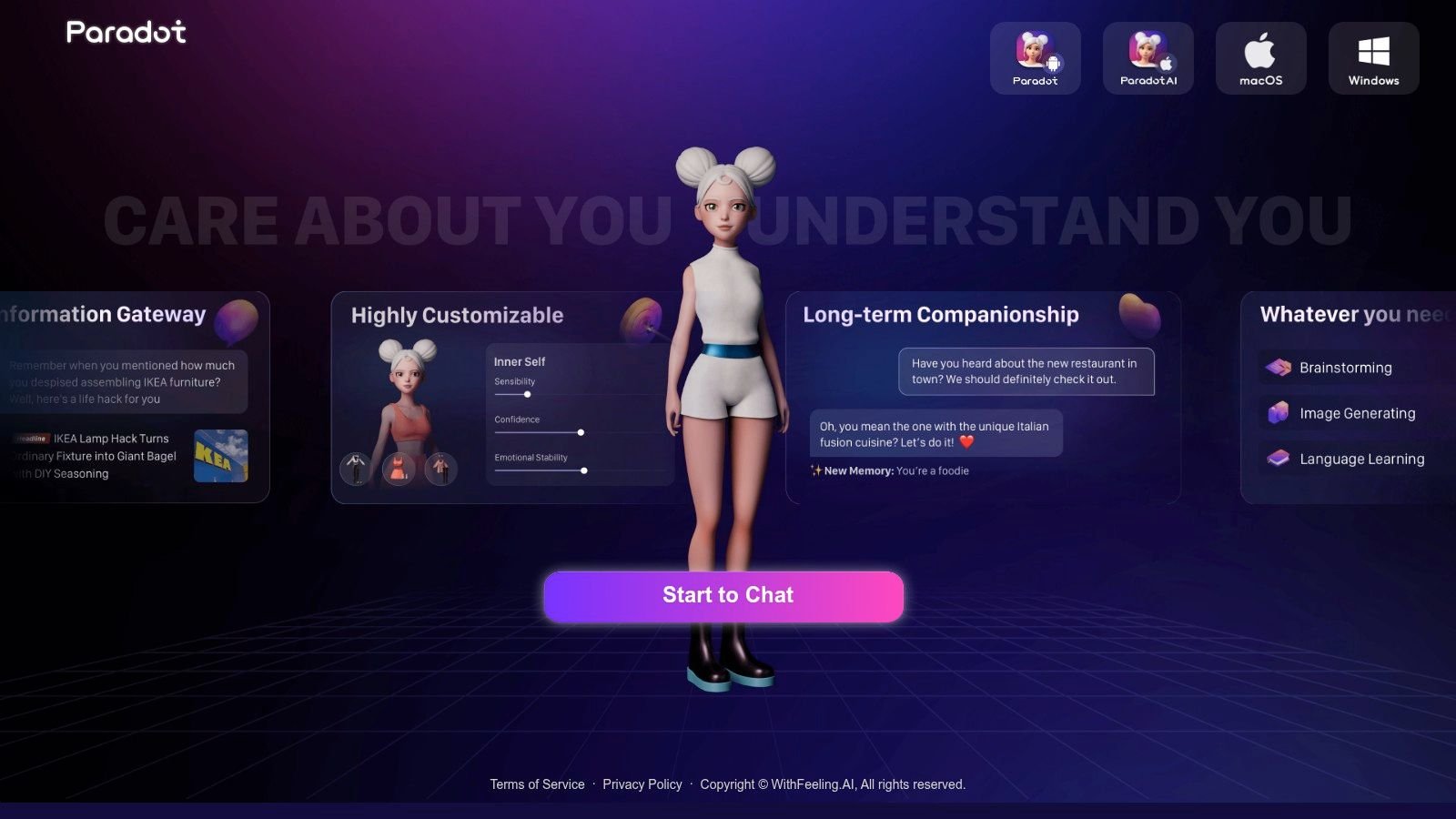
Paradot is built for users who want to tune a companion quickly without getting buried in a complicated interface. You can choose the companion's look, voice, and personality traits, then edit those details later, which makes the app feel approachable even if you're new to girlfriend-style AI. It supports web and mobile access, so it's flexible enough to test across devices.
What to expect
The best thing about Paradot is the fast onboarding. You can get to a usable conversation quickly, then refine tone and personality as you go, which is useful if you don't want to spend an hour setting up a character before talking to it. The app also gives you a free start, so you can assess whether its conversation style feels natural enough for regular use.
The limitations are mostly around depth and ecosystem. Pricing is surfaced mainly in-app, and the third-party ecosystem is smaller than the legacy platforms, so there's less of a community layer around it. That's fine if you care about direct use, not fine if you want the social discoverability of a larger platform.
Good use case: Paradot works best for users who want a customizable companion without a steep setup curve.
If you're comparing personality control across apps, Paradot is worth testing against the same conversation prompt you'd use in other platforms. Then open the Paradot website and see whether the current interface makes the setup process feel smoother than the competition.
Anima
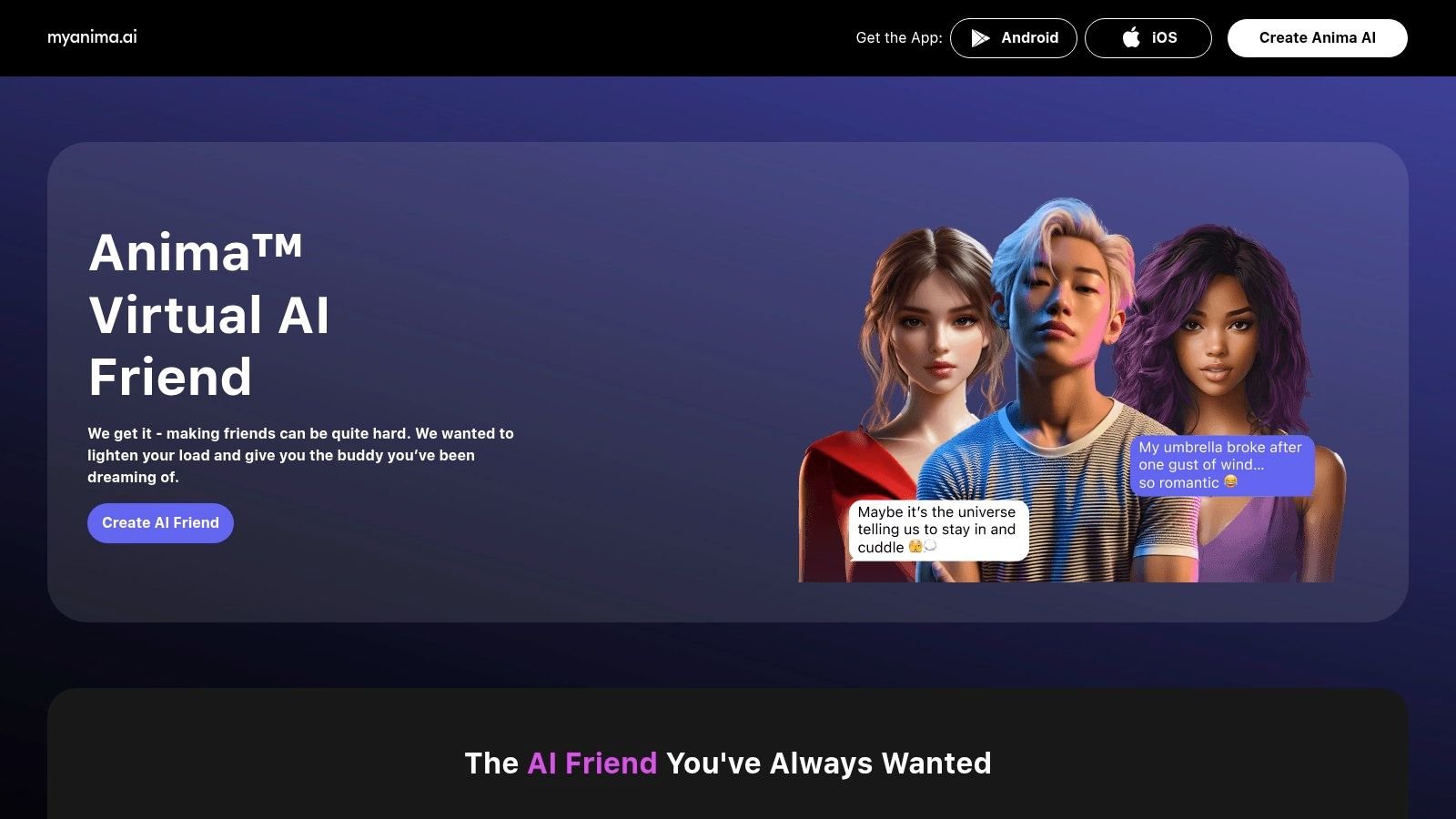
Anima, also known as MyAnima, is one of the easier companion apps to recommend if you want something gentle, casual, and low-friction. It combines a virtual girlfriend mode with simple personality tweaks and a tone that feels supportive by default. The app is available on iOS, Android, and web, which makes it easy to try without locking yourself into a single device.
What it feels like to use
Anima feels straightforward from the start. You don't have to wrestle with dense menus, and the app is clearly aimed at companionship rather than productivity or technical novelty. That makes it a better fit for people who want a light emotional space or PG-13 roleplay rather than a deep customization project.
The downside is that the app's advanced features are more limited than what newer multimedia-heavy platforms offer. Pricing is often surfaced in-app at checkout, which means you may not know the exact value equation until you are already partway through the flow. It's also less ambitious on voice and media than some competitors.
Who should look at it
Anima makes sense for users who want a supportive baseline app and don't need every possible feature. It's also a practical option if you're testing whether companion AI even fits your routine before paying for a heavier platform. Visit the MyAnima website if you want to review the current app experience and compare it to the more feature-dense products.
Chai
Chai feels like a bot marketplace with a relationship angle, which is exactly why some users love it. You get a large pool of romance and roleplay bots, creation tools, and web and mobile access, so the app invites experimentation. If you enjoy trying lots of personalities quickly, it has a very low barrier to entry.
Strengths and limits
Chai's strength is the sheer volume of options and the active community around them. The free entry point is real, but the runway is short, and the platform pushes users toward upgrades quickly. That makes it more useful as a discovery tool than as a place to expect long, uninterrupted free sessions.
The pricing model also varies between web and app, and the entitlements aren't always identical across regions. Mixed reports on ads and usage quotas add more uncertainty, which is exactly the kind of thing that frustrates users who want predictable access. If pricing clarity matters to you, Chai deserves extra scrutiny before you spend.
If an app's free tier feels like a demo after a few turns, treat that as a signal, not an inconvenience.
Open the Chai pricing page before you subscribe, especially if you plan to use it across devices. The right question here is not whether Chai has enough bots, it's whether its upgrade path fits the way you chat.
CrushOn.AI
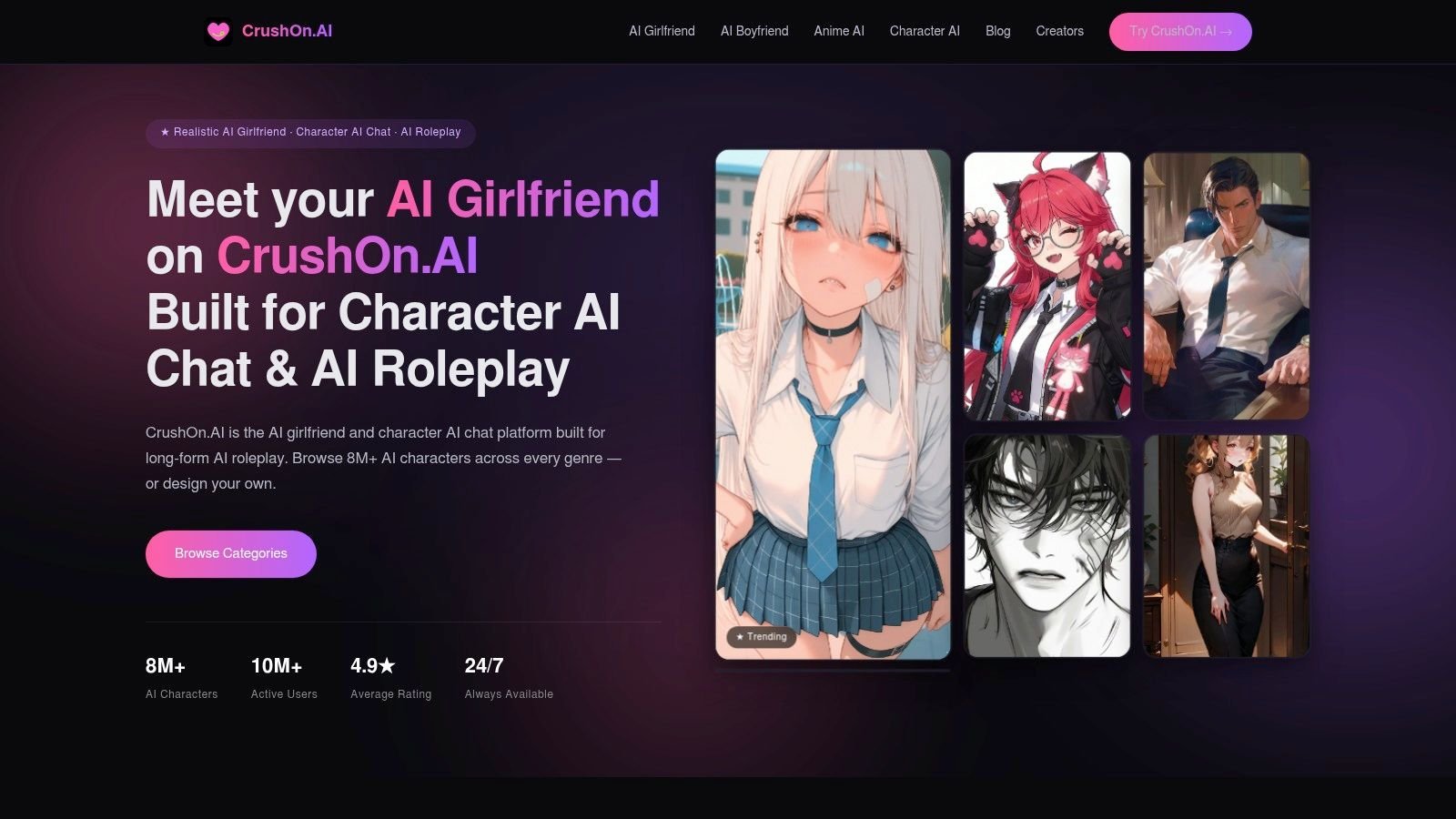
CrushOn.AI is the cleaner choice for users who want fewer content restrictions and more control over model behavior. It offers swappable AI models, long-memory tiers, voice presets, custom voice slots on paid plans, and a mobile PWA, so it feels more configurable than a lot of mainstream companion apps. If you know what kind of interaction style you want, this platform gives you room to pursue it.
What makes it different
The model choice matters here. Instead of locking you into one conversational style, CrushOn.AI lets you move between models, which can change how playful, creative, or steady the companion feels. That flexibility is a real advantage for users who already know what kind of tone they want from the app.
The downside is complexity. The credit system can be confusing at first, and the premium experiences, especially the best models and bigger memory, require higher tiers. It's a good fit for informed users, not necessarily for someone who wants the simplest possible path.
For a practical comparison point, look at the CrushOn.AI platform and see how the current model and voice options are presented. If you've been disappointed by overly rigid filters elsewhere, this is one of the first apps worth checking.
DreamGF
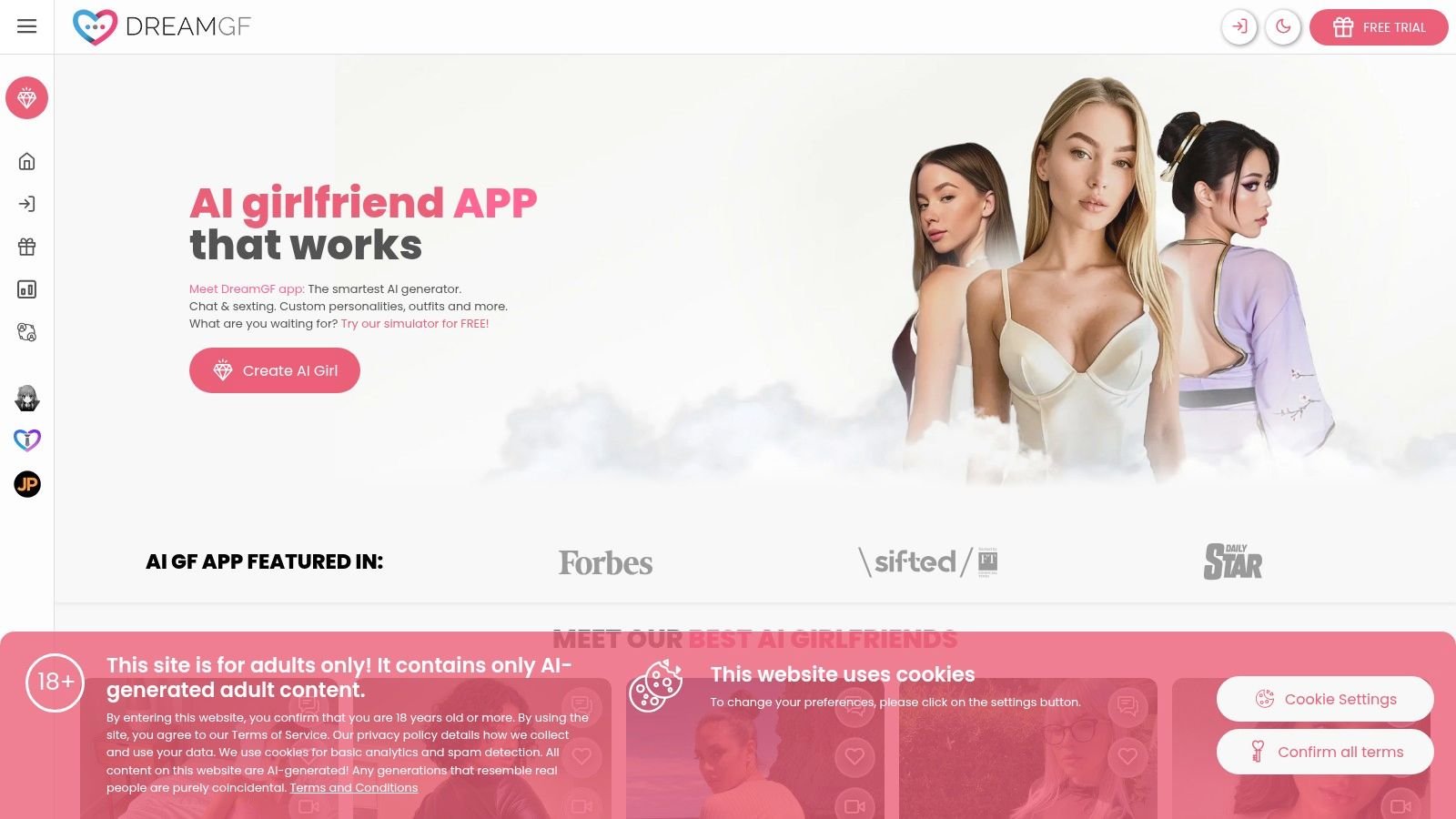
DreamGF is for users who care most about appearance customization and a highly personalized girlfriend build. It gives you detailed control over face, body, outfit, and traits, then layers chat, voice messages, sexting, and on-demand image generation on top. The platform also includes a catalog of ready-made companions, which is useful if you don't want to build from scratch.
What works, and what doesn't
The strongest reason to use DreamGF is the depth of the character builder. If you want to shape the companion visually and personality-wise, this is one of the clearest options in the category. It also has posted pricing tiers, which is helpful because many similar apps hide the cost until checkout.
The trade-off is ongoing spend. Token-based image and content generation adds cost over time, so the headline subscription is not the full picture. Some users also report variable image consistency across sessions, which matters if visual continuity is the reason you signed up.
For readers who want a more direct entry into girlfriend games and related companion formats, this AI girlfriend games guide for the United States adds useful context. Start with the DreamGF website if your first question is whether the current builder and pricing model fit the kind of companion you want to create.
Romantic AI
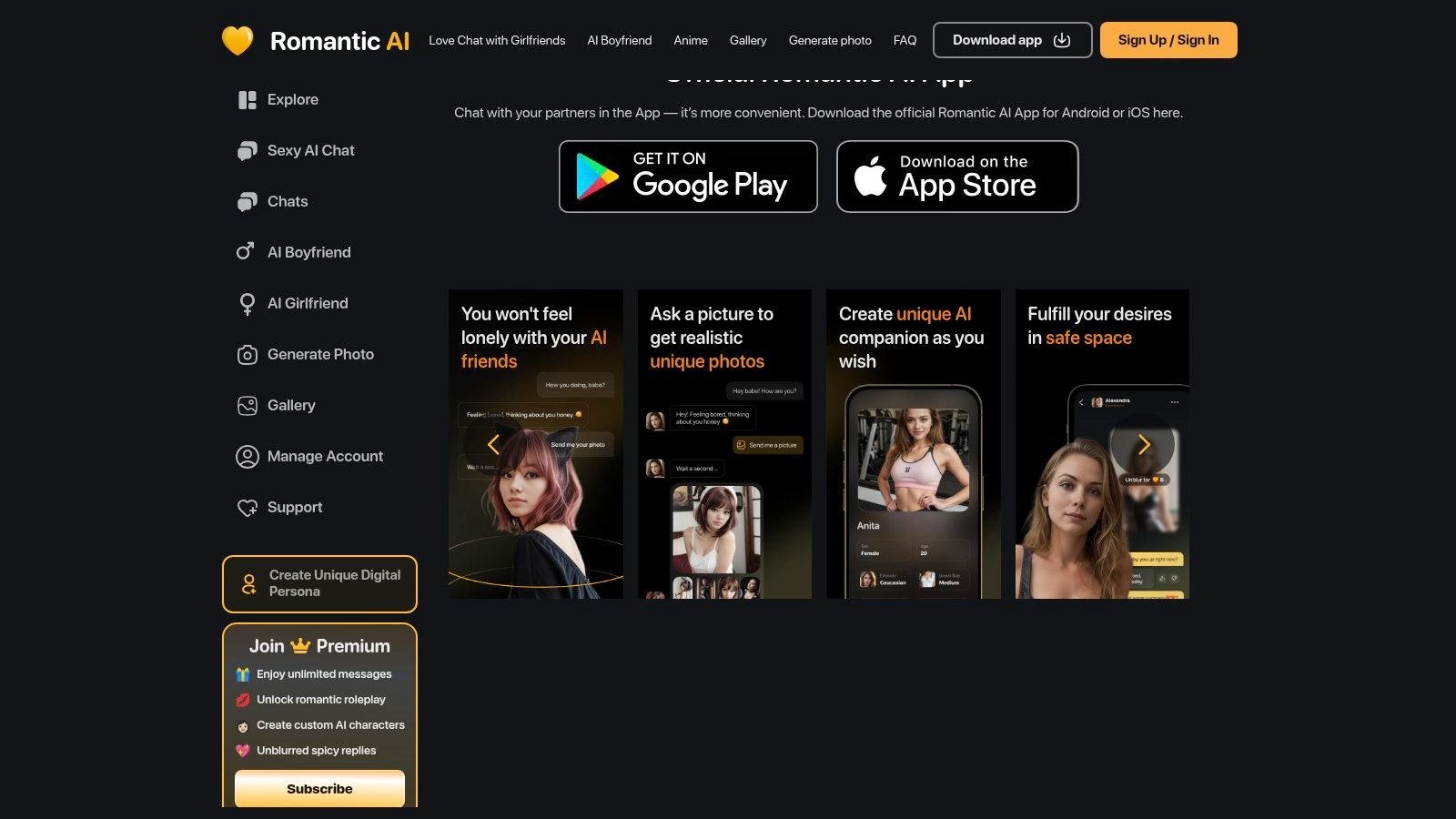
Romantic AI is the simplest app in this group to recommend for people who want a gentle on-ramp. It focuses on customizable personalities, a straightforward mobile experience, and a low-friction setup that feels less technical than the power-user platforms. If you want to start chatting without thinking too hard about model selection or advanced configuration, it does that job cleanly.
Best for
This app is strongest for users who want an easy relationship-style companion on iOS or Android. Its design reduces friction, which is useful if the idea of companion AI interests you more than the mechanics behind it. That makes it a practical first stop for users who want to see whether the category suits them at all.
The trade-off is depth. Romantic AI offers less model choice and less complexity than sites built for power users, and exact plan inclusions are surfaced mainly in-app. That means you'll want to inspect the current checkout screen closely if you plan to pay.
The best simple app is the one that stays simple after signup, not just on the marketing page.
Check the Romantic AI app page if you want to verify how the current mobile flow and subscriptions are presented. It's a good candidate when usability matters more than feature sprawl.
Kindroid
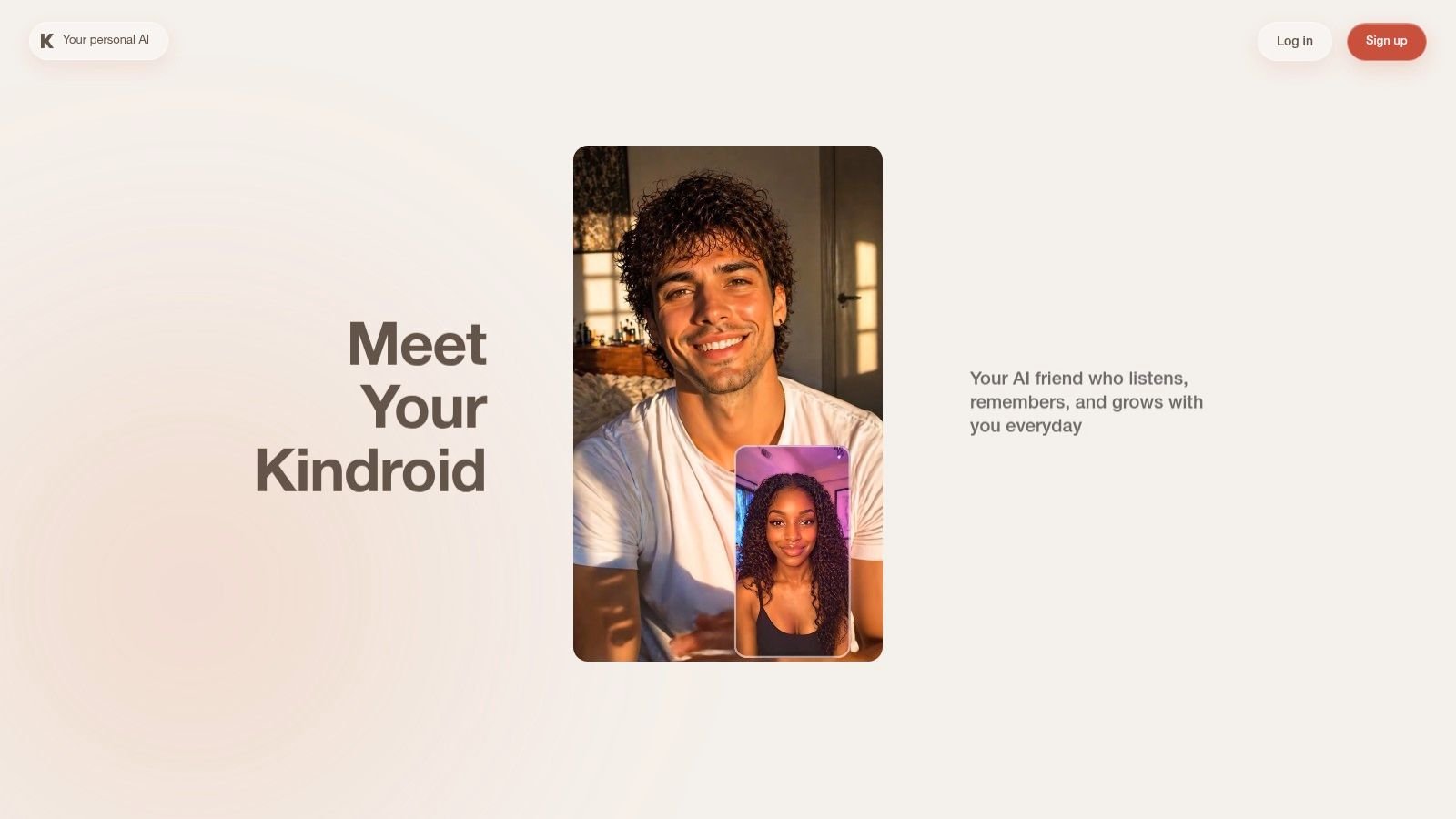
Kindroid stands out because it pushes hardest on multimedia presence. Text, voice notes, and live video calls give it a more present-feeling personality than apps that stay text-only or voice-light. It also offers personality tuning and ongoing memory, so it's not just a visual gimmick on top of a weak chat engine.
Where it fits
Kindroid is a smart choice if you want your companion to feel more embodied. The live video angle changes the interaction dramatically, especially for users who care about presence and immediacy. The UI is clean, the onboarding is straightforward, and access across iOS, Android, and web makes it flexible enough for regular use.
The main caution is that Kindroid is newer than some incumbents, so it has fewer third-party reviews and a less established ecosystem. Pricing is also usually surfaced through app stores or checkout rather than a transparent public matrix, which means you'll want to verify the current plan before subscribing.
For anyone comparing voice and video across platforms, Kindroid is one of the few apps worth testing early. Visit the Kindroid website and see whether the current multimedia options justify the trade-off in ecosystem maturity.
Top 10 Girlfriend AI Apps Comparison
| Product | Core features ✨ | UX / Quality ★ | Price / Value 💰 | Target audience 👥 | USP / Highlight 🏆 |
|---|---|---|---|---|---|
| Replika | Relationship modes, voice & calls, avatar, guided journaling | ★★★★ | 💰 Free + paid tiers (region-dependent) | 👥 Emotional-support seekers | 🏆 Structured activities & mature ecosystem |
| Character.AI | Massive user-created characters, build tools, voice & group chat | ★★★★ | 💰 Free core; Plus for priority/faster responses | 👥 Roleplayers & creators | ✨ Vast character library; fast-priority plan |
| Nomi | Memory-forward design, proactive pings, voice notes, multi-companions | ★★★★ | 💰 Free start; paid tiers (variable) | 👥 Users wanting continuity & realism | 🏆 Persistent memory & consistent personality |
| Paradot | Persona/voice tuning, editable traits, memory, web+mobile | ★★★ | 💰 Free trial; in-app paid tiers | 👥 Quick-customization users | ✨ Fast onboarding & flexible customization |
| Anima (MyAnima) | Virtual girlfriend mode, personality tweaks, token/subscription model | ★★★ | 💰 Free + in-app purchases/subscriptions | 👥 Casual companionship & PG-13 users | ✨ Approachable, supportive default tone |
| Chai | Bot marketplace, creation tools, web & mobile, Pro upgrades | ★★★ | 💰 Free + Pro/Ultra-style upgrades (varies) | 👥 Casual roleplayers & bot creators | ✨ Large experimental community & discovery |
| CrushOn.AI | Multiple swappable models, 40+ voice presets, credit system | ★★★★ | 💰 Credit-based tiers; mid–high spend potential | 👥 Power users seeking control | 🏆 Model choice & fewer content restrictions |
| DreamGF | Deep character builder (appearance/traits), chat, image tokens | ★★★★ | 💰 Clear tiers + token costs for images | 👥 Visual/customization-focused users | ✨ Extensive appearance & image generation |
| Romantic AI | Personality presets, simple UX, mobile apps, subscriptions | ★★★ | 💰 Subscription-led (in-app pricing) | 👥 New users wanting easy setup | ✨ Simple, low-friction on-ramp |
| Kindroid | Text, voice notes, live video calls, personality tuning & memory | ★★★★ | 💰 In-app / app-store pricing | 👥 Users who want multimedia presence | 🏆 Strong multimedia (voice + live video) presence |
Match the App to Your Boundaries and Routine
The cleanest way to choose among girlfriend AI apps is to work backward from your actual use case. If you want a mainstream, relationship-style app with a mature ecosystem, Replika is the obvious baseline. If you want breadth and community-created characters, Character.AI is still the easiest public library to explore. If continuity matters most, Nomi is the stronger pick because it's built around an ongoing relationship feel rather than a feed of interchangeable bots.
Then decide how much customization and multimedia presence you want. DreamGF is the most obvious fit for appearance-building, while CrushOn.AI gives you more model choice and lighter content boundaries. If you want voice and video to be part of the experience, Kindroid deserves direct comparison against anything text-first. If you only want a simple, low-friction start, Romantic AI is easier to live with than a platform that expects you to understand tiers and credits on day one.
The most important habit is to test conversation continuity before you subscribe. Send the same prompt, mention a detail, leave the chat, and come back later to see whether the app remembers what matters. Then inspect the current pricing screen carefully, because many companion apps surface the limits only at checkout, and pricing can vary by platform or region.
Privacy questions matter just as much. Review what the app says about data retention, chat history, voice logs, and media handling before you share anything personal. Avoid sensitive disclosures, set a spending limit for subscriptions or credits, and treat emotional support from an AI as supplementary, not as a substitute for trusted people or professional help. The broader market is growing fast, but the category still rewards careful users more than impulsive ones, especially when value is concentrated in a smaller set of top apps and the top 10% of apps can capture most of the revenue in the category (consumer spend summary).
One last practical point. Use the app that matches your boundaries, not the one with the flashiest marketing. That's the difference between a companion you'll keep using and one you'll abandon after the novelty wears off.
DocuCraft offers a clear example of why transparent controls matter, it gives you structured workflows for PDFs, visible job states, and secure handling instead of guesswork. That same standard is worth demanding from any companion app that stores personal data or manages sensitive interactions. If you want a service built around understandable workflows and careful data handling, visit DocuCraft.