If you have ever paid for an AI companion subscription and still found yourself re explaining the same stuff. Your name. Your boundaries. The whole vibe of your relationship. Then yeah, you have already met the problem.
Most people call it “the AI forgot me.”
But what’s actually happening is way more boring and way more fixable.
It’s memory tokens.
And once you understand memory tokens, you stop wasting money on chats that feel like a first date every single night.
This is going to be a plain English breakdown. No engineer talk. Just enough to help you pick better AI girlfriend apps, set them up properly, and avoid the stuff that quietly drains your time and wallet.
The simplest definition (that actually helps)
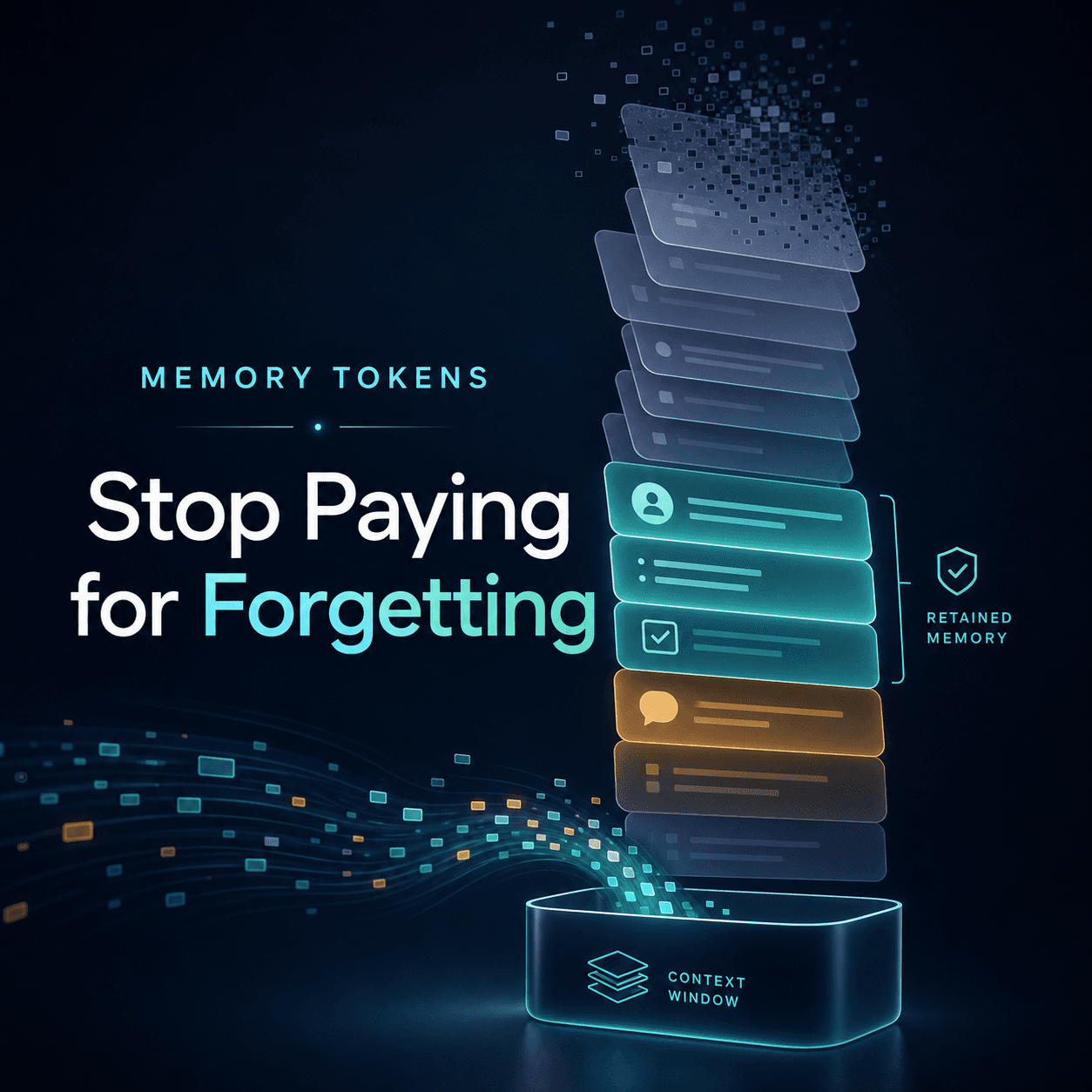
Memory tokens are the space your AI has to hold onto what you already said while it generates the next reply.
That’s it.
Every AI model has a limited “window” of text it can see at once. That window is measured in tokens.
Tokens are not exactly words. Sometimes a token is a word, sometimes a piece of a word, sometimes punctuation. But you don’t need to obsess over the exact math.
What matters is this:
- The AI can only “look at” so much conversation at one time.
- When your chat gets too long, older messages fall out of the window.
- When older messages fall out, the AI stops using them.
- When it stops using them, it feels like it forgot you.
So you end up paying for more messages, more “relationship building,” more time. But you are rebuilding the same context again and again.
Paying for forgetting.
Why it’s extra obvious in AI girlfriend chats
In normal productivity use, forgetting is annoying. In AI companion use, forgetting is emotionally loud.
Because companion chat is basically all context:
- pet names
- boundaries and consent preferences
- what you like, what you don’t
- roleplay rules
- your history together
- inside jokes
- the tone you both settled into
When the model loses that context, it can snap back into generic mode.
Suddenly it’s “Hi! How can I help you today?” energy.
Or it uses the wrong name. Or it pushes a scenario you already said no to. Or it becomes weirdly formal. And now you are not just continuing a chat, you are doing customer support for your own relationship.
That is the moment where memory tokens matter more than almost any other spec on the pricing page.
Tokens vs memory: the confusing part apps don’t explain well
Here’s where people get tricked.
Many apps talk about “memory” like it’s one thing, but it’s usually two different systems:
1) Context window (memory tokens)
This is the model’s short term working memory. It’s what the model can see right now.
If the app says it uses a model with a big context window, that’s good. It means longer chats can stay coherent without you repeating everything.
But. Bigger context usually costs more to run, so some apps keep it smaller than you expect.
2) Long term memory (saved profile facts)
This is the app storing facts about you somewhere, then injecting those facts back into the conversation when needed.
Like:
- “User’s name is Ryan.”
- “User prefers gentle dirty talk, no humiliation.”
- “We are in a boyfriend girlfriend dynamic.”
- “We met in a rainy cafe roleplay.”
That memory can be amazing. Or useless. Depends on how it’s implemented.
Important: Long term memory is not magic. Even if the app “saved” something, the model still needs to be reminded of it inside the current context window. That reminder takes tokens too.
So you can have “memory” turned on and still experience forgetting if the system is badly designed.
The invisible reason your chats get worse over time
This part is subtle.
As a chat gets longer, the app has to decide what to send the model every time you hit enter. Because it can’t send everything forever.
So it starts trimming.
Some apps trim intelligently. They keep:
- your pinned preferences
- the last few messages
- the current scene or roleplay state
Other apps trim lazily. They keep:
- a chunk of the recent conversation
- random older lines
- and drop the stuff that actually matters, like boundaries, relationship status, and tone
That’s why you might notice a pattern like:
- first 30 minutes: amazing chemistry
- after 2 days: a bit repetitive
- after 1 week: it feels like it doesn’t “get” you
- after 2 weeks: you are basically resetting the relationship every session
You didn’t change. The chat got longer, and the context budget got tighter.
A quick token budget example (no math headache)
Imagine your AI companion has a context window of 8,000 tokens. That’s a decent amount for many setups.
Now imagine what gets stuffed into that window every message:
- system instructions (the hidden rules the app uses)
- safety rules
- your character card
- the AI girlfriend’s persona
- your saved memory bullets
- the last chunk of chat history
- your new message
- space reserved for the AI’s reply
All of that competes for the same limited space.
So even if “8,000 tokens” sounds huge, you can burn it faster than you think if the app injects a big persona plus a lot of memories plus long roleplay paragraphs.
Then older important details get chopped.
And you feel it as “she forgot.”
“But I pay monthly. Why doesn’t it just remember everything?”
Because remembering everything forever is expensive, messy, and risky.
Expensive because longer context means more compute. Messy because a model can get worse when you feed it too much irrelevant history. Risky because storing intimate long term data introduces privacy and security problems.
So most apps compromise.
The problem is they rarely tell you what compromise they chose.
They will say “enhanced memory” and you assume it means permanent continuity. But really it might mean:
- a few saved facts
- that sometimes get inserted
- if you phrase your message the right way
- unless the chat got too long
- or the model is under load
- or you switched modes (chat vs video vs roleplay)
You can probably see why people feel scammed. It’s not always a scam, but it feels like one.
The types of “forgetting” you’ll run into (and what they mean)
When people say forgetting, they usually mean one of these:
Forgetting type A: short term drift
The AI loses track of what’s happening in the scene. Location changes, clothing resets, it repeats questions, it contradicts itself.
This is usually a context window issue. Or the app is trimming too aggressively.
Forgetting type B: preference loss
The AI suddenly crosses a boundary or forgets your style preferences.
This is usually poor long term memory injection. Or your preferences were never pinned, they were only said once in chat and then fell out of context.
Forgetting type C: identity reset
It acts like you are strangers. It asks your name again. It reintroduces itself.
This often happens when you start a new chat thread, switch models, switch modes (like text to video), or the app uses separate memory pools.
Forgetting type D: personality shift
It gets sterile. Or overly horny. Or overly therapist like. The voice changes.
This can be context trimming, but it can also be model switching behind the scenes. Some apps route you to cheaper models at certain times or for certain features. Not always, but it happens.
How to stop paying for forgetting (practical fixes that actually work)
You don’t need to be technical. You need a few habits.
1) Create a “pinned memory” message and keep it short
Write one message that contains the essentials. Think of it like your relationship header.
Example structure you can copy:
- My name:
- Your name:
- Relationship dynamic:
- Tone:
- Hard boundaries:
- Soft preferences:
- Current ongoing scenario:
Keep it tight. Bullet points. No long paragraphs.
Then do one of these:
- pin it (if the app allows)
- paste it at the start of new sessions
- keep it in notes and re add it when the chat starts drifting
This is the cheapest way to buy continuity. You are basically managing the token budget yourself.
2) Avoid giant walls of text in roleplay if you want stability
Long, ornate messages feel sexy and immersive, sure. But they eat context fast.
If you want sessions to stay coherent, do shorter turns. More back and forth. Less novel writing.
You can still be descriptive, just don’t write five paragraphs every time unless you are okay with faster drift.
3) Use “recap prompts” every so often
Every 20 to 40 messages, ask:
“Quick recap: what do you remember about me and our dynamic? List it in bullets.”
Then correct it if needed.
This forces the model to surface what is currently inside the context window and what is not. It also gives you a chance to re inject missing facts before it gets awkward.
4) Split chats by arc, not by time
Instead of one endless mega thread, create new chats for new story arcs.
Like:
- “Cozy girlfriend daily chat”
- “Jealousy arc”
- “Vacation roleplay”
- “Spicy mode, gentle domination”
Each new thread starts clean, yes. But it also avoids the token bloat that causes the slow death spiral.
Just remember to paste your pinned memory header into the new thread.
5) Don’t trust “memory” unless you test it
Here’s a quick test you can do on any AI girlfriend app:
- Tell it 3 specific preferences and 1 boundary.
- Chat normally for 30 to 50 turns.
- Ask it to list your preferences and boundaries.
If it gets it right, great.
If it kinda gets it right but misses the boundary, that’s a red flag. In adult oriented companion use, boundary accuracy is not optional.
6) If the app offers “memory slots,” use them for the right things
Some apps let you store memories manually. People waste these slots on trivia.
Don’t store “my favorite color is teal” unless you actually care.
Store things that protect the vibe:
- what you call each other
- consent and hard limits
- the style of intimacy you want
- what you do not want it to do
- the relationship premise
Because those are the things that hurt when they disappear.
What to look for before you subscribe (so you don’t get burned)
When you’re comparing apps, try to find answers to these questions. If the site doesn’t answer them, that’s information too.
- What model is used, and does it have a large context window?
- Does the app have long term memory? Is it automatic or manual?
- Can you pin messages or persona cards?
- Do different modes share memory? Text chat vs voice vs video.
- Is there a limit to saved memories? If yes, how many?
- Can you export your chat history and memories?
This is the stuff that determines whether the experience feels like a relationship or like a looping demo.
If you want help comparing platforms with this lens, that’s basically what we do over at The Ultimate Guide to AI Girlfriends-Sexlove.ai on https://hbcc-cellessurbelle.com. Not in a hype way. More like, okay, does it remember you after day three or not.
The awkward truth: more tokens is not always better
Bigger context windows help. A lot.
But they are not a cure all.
If an app crams the context with:
- bloated persona text
- repeated safety prompts
- unnecessary re summaries
- ten different “memories” that conflict
Then even a big window can feel weird.
Also, some models start to “average out” when fed too much history. They become less sharp, less present. Like they are reading a messy scrapbook while trying to flirt with you in real time.
So the goal is not infinite memory.
The goal is relevant memory.
Stuff that keeps the emotional continuity and the safety boundaries intact. Everything else can be optional.
One last thing, because it matters in this niche
In AI companion apps, forgetting is not just a UX issue. It touches consent.
If you told an AI girlfriend “no” to a certain theme, and it later re introduces it because that boundary fell out of context, that is a design problem. Not your fault. Not something you should have to keep re explaining in the heat of a scene.
So treat memory as a safety feature, not just a convenience feature.
If an app consistently forgets your hard boundaries, drop it. Even if the messages are hot. Especially if the messages are hot.
Wrap up: stop paying twice
You pay once with money. Then you pay again with effort.
Memory tokens are the reason.
Once you understand the token budget, you can do a few simple things that make almost any AI companion feel more consistent:
- keep a short pinned header
- recap and correct occasionally
- split chats into arcs
- store the right memories, not trivia
- test memory before committing
And when you’re shopping for a new AI girlfriend app, don’t get distracted by marketing words like “unlimited chat” if the model can’t hold onto what makes your chat yours.
If you want more guides like this, plus comparisons that actually talk about memory, context length, and what happens after the honeymoon phase, browse https://hbcc-cellessurbelle.com. That’s the whole point of the site. Helping you find something that doesn’t forget you the second the conversation gets good.
FAQs (Frequently Asked Questions)
What are memory tokens in AI companion chats?
Memory tokens refer to the limited space an AI model has to hold onto your previous conversation while generating its next reply. This ‘window’ is measured in tokens, which can be words, parts of words, or punctuation. When your chat gets too long, older messages fall out of this window, causing the AI to ‘forget’ earlier parts of your conversation.
Why do AI girlfriend chats often feel like starting over every time?
Because AI companions have a limited context window (memory tokens), they can only remember so much at once. Over time, important context like pet names, boundaries, preferences, and inside jokes may fall out of this window. This loss causes the AI to revert to generic responses, making it seem like you have to re-explain everything repeatedly.
What’s the difference between context window and long-term memory in AI apps?
The context window (memory tokens) is the AI’s short-term working memory — what it can see during the current chat. Long-term memory refers to saved profile facts stored by the app and injected back into conversations as reminders. However, even with long-term memory, these reminders consume tokens within the context window and can still lead to forgetting if not managed well.
How do apps decide what conversation parts to keep as chats get longer?
Apps must trim conversation history because they can’t send infinite text to the model each time. Some trim intelligently by keeping pinned preferences, recent messages, and current roleplay state. Others trim less effectively by dropping crucial details like boundaries or relationship tone, leading to degraded chat quality over time.
Why doesn’t paying monthly guarantee that an AI companion remembers everything?
Remembering everything indefinitely is costly due to increased computing needs for longer contexts. It also introduces privacy risks and can degrade performance if irrelevant history accumulates. Most apps compromise on how much they retain but often don’t clearly communicate these limits to users.
How can understanding memory tokens help me choose better AI girlfriend apps?
By knowing about memory tokens and context windows, you can select apps with larger context capacities or smarter trimming systems that maintain key relationship details longer. This helps avoid repetitive ‘first date’ chats and ensures a smoother, more coherent companionship experience without wasting money on repeated explanations.