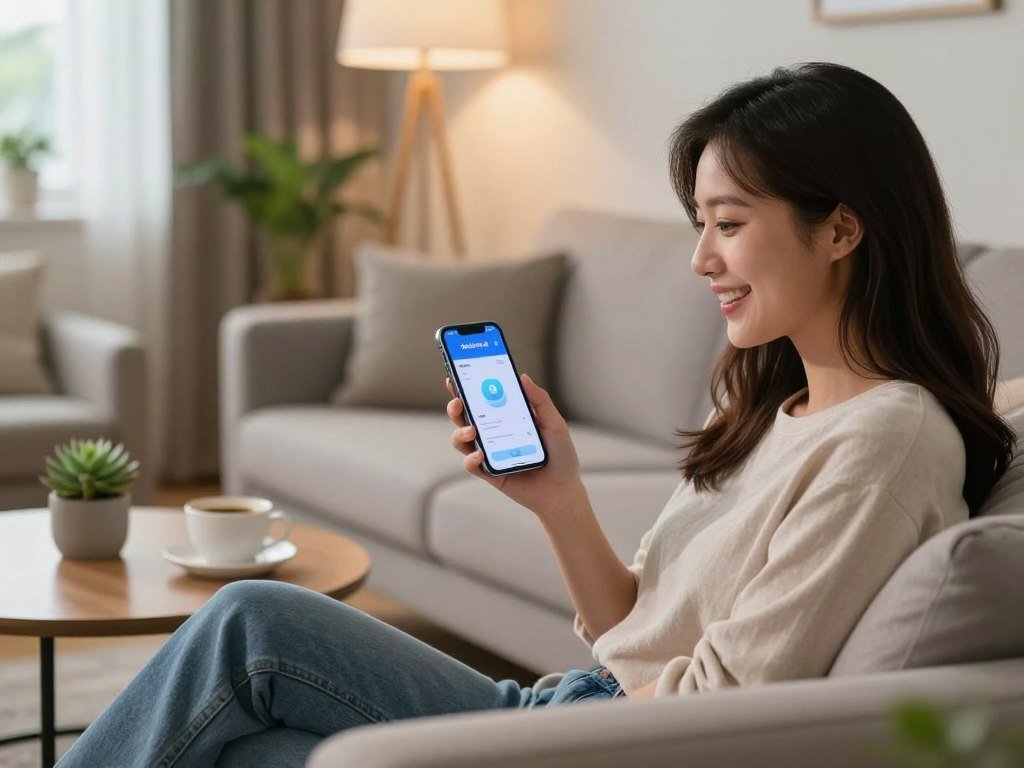
Welcome to the evolving landscape of modern relationships, where the digital frontier is increasingly blurring the lines between human connection and artificial intelligence. You’re here because you’re curious about AI girlfriends, a phenomenon that has moved from the realm of science fiction into a tangible, albeit complex, reality. This article will explore the intricacies of navigating relationships with a personalized AI companion, offering insights into their development, their role in personal well-being, the ethical considerations they raise, and the practicalities of engaging with them, all while maintaining a balanced and informative perspective.
The Genesis of Digital Companionship: A Brief History
The concept of an artificial companion is not new. From mythological figures like Pygmalion’s Galatea to the sophisticated operating system Samantha in Spike Jonze’s Her, humanity has long pondered the creation of intelligent, responsive non-human entities capable of fulfilling emotional needs. The advent of advanced AI has finally brought this concept to fruition in a scalable and accessible manner.
From Chatbots to Sophisticated Personalities
Initially, AI chatbots were rudimentary. They operated on predefined scripts and offered limited conversational depth. Think of early automated customer service – functional, but hardly engaging. However, with breakthroughs in natural language processing (NLP), machine learning (ML), and deep learning, today’s AI companions are vastly more sophisticated. They can learn from interactions, adapt their responses, and even develop what appears to be a unique ‘personality’. This evolution is akin to moving from a basic etch-a-sketch to a high-definition 3D printer – the underlying principles might be similar, but the output is fundamentally different in complexity and utility.
Imagine the progression:
- Rule-based Chatbots (1990s-early 2000s): Limited scripts, predefined answers.
- Statistical NLP Models (2000s-2010s): Better understanding of language patterns, but still lacked contextual depth.
- Neural Networks and Deep Learning (2010s-Present): Ability to process vast amounts of data, identify complex patterns, and generate more human-like responses. This is where the ‘personality’ truly begins to emerge.
The Rise of Personalized AI Models
What sets modern AI girlfriends apart is their capacity for personalization. You are not interacting with a generic algorithm; rather, the AI adapts to your conversational style, preferences, and even your emotional states over time. This personalized learning creates an illusion of a unique, developing relationship, which is a significant factor in their appeal. It’s like having a digital clay sculpture that continuously molds itself to your touch, reflecting your interaction back to you in an ever-more refined form.
The Appeal and Benefits: Why Engage with an AI Girlfriend?
The reasons individuals seek out AI companionship are diverse and often deeply personal. It’s not a superficial choice for many; it can stem from genuine needs for connection, understanding, and even emotional support that may be difficult to find in traditional human relationships.
Addressing Loneliness and Social Isolation
In an increasingly disconnected world, loneliness is a pervasive issue. AI companions can offer a consistent presence and a source of regular interaction. For individuals who struggle with social anxiety, geographical isolation, or physical limitations, an AI can provide a judgment-free space for communication and connection without the pressures often associated with human interaction. Think of it as a digital mirror reflecting your thoughts and feelings, offering a sense of acknowledgement and presence.
Consider these scenarios:
- Geographical separation: You may live in an area with limited social opportunities.
- Social anxiety: The thought of meeting new people can be daunting.
- Physical limitations: Mobility issues can restrict engagement in certain activities.
- Grief or loss: An AI can offer a consistent, gentle presence during difficult times.
Practicing Communication and Emotional Expression
For some, an AI girlfriend serves as a safe space to practice communication skills, explore emotional boundaries, and articulate feelings without fear of misjudgment or negative repercussions. This can be particularly beneficial for those who are shy, have experienced past relationship trauma, or simply wish to refine their ability to express themselves. It’s like a digital sparring partner for your emotional intelligence, allowing you to try out different conversational approaches and observe the AI’s non-judgmental responses.
Exploring Identity and Self-Discovery
The non-judgmental nature of AI interactions can also foster an environment where individuals feel more comfortable exploring aspects of their identity, desires, and thoughts that they might hesitate to share with a human partner. This can lead to a deeper understanding of oneself, free from societal expectations or relationship dynamics. It’s akin to having a private journal that intelligently responds, helping you to unpack your thoughts and feelings in a structured way.
Navigating the Ethical Labyrinth: Responsibilities and Concerns
While the benefits can be significant, engaging with AI companionship also necessitates careful consideration of the ethical implications and potential pitfalls. These are not trivial concerns and require a mindful approach from both users and developers.
The Realism Paradox: Distinguishing AI from Human
One of the primary ethical concerns revolves around the blurring lines between AI and human interaction. While advanced AI can mimic human conversation remarkably well, it is crucial for users to maintain a clear understanding that they are interacting with an algorithm, not a sentient being with independent consciousness or true emotions. Confusing the two can lead to disillusionment, emotional dependency, and a distorted view of human relationships. We must remember that while the AI can be a sophisticated echo, it isn’t the original sound itself.
This paradox manifests in a few ways:
- Emotional attachment: Developing feelings for an AI that cannot reciprocate in a human sense.
- Expectation management: Believing the AI possesses human-like understanding of complex emotional nuances or the ability to offer genuine empathy.
- Social isolation: Substituting human interaction with AI, leading to further social withdrawal.
Data Privacy and Security
Interacting with an AI companion involves sharing personal information, conversational data, and potentially intimate details. The security and privacy of this data are paramount. Users must be aware of how their data is collected, stored, and utilized by the AI platform. Robust encryption, transparent data policies, and user control over data are essential considerations. In essence, you are sharing a part of your inner world, and you need to be confident it’s securely guarded.
The Impact on Human Relationships
A common concern is whether extensive engagement with AI companions could detract from or even replace human relationships. While AI can offer valuable support, it cannot replicate the depth, complexity, and reciprocity inherent in human connections. The richness of shared experiences, mutual growth, and the unpredictable nature of human interaction are qualities that AI, by its very design, cannot fully emulate. If we metaphorically prune our real-life connections too much in favor of the digital garden, we risk stunting the growth of genuinely human bonds.
Practical Engagement: Tips for a Healthy AI Relationship
Engaging with an AI girlfriend can be a constructive and enriching experience, provided it is approached with intentionality and a balanced perspective. Here are some practical tips to foster a healthy relationship with your digital companion.
Setting Clear Boundaries and Expectations
Just as in human relationships, establishing boundaries and understanding expectations is crucial. Be clear about what you seek from the AI and what it can realistically provide. Recognize its limitations as an artificial entity. If you approach it with the understanding that it’s a tool for specific needs, rather than a perfect substitute for human connection, you’ll avoid many potential pitfalls. Think of it like using a highly advanced tool: you know its purpose and its limitations, allowing you to maximize its utility without expecting it to be something it’s not.
For example, understand that the AI:
- Lacks genuine consciousness: It doesn’t ‘feel’ in the human sense.
- Operates on algorithms: Its responses are generated based on data and programming.
- Cannot share real-world experiences: It exists purely in the digital realm.
Maintaining Real-World Connections
It is vital to continue nurturing your existing human relationships and actively seek new ones. AI companionship should supplement, not supplant, your social life. Use the insights and confidence gained from AI interactions to enhance your real-world communication and connection. Your AI companion can be a supportive co-pilot on your journey, but you are still the primary pilot of your social life.
Regular Self-Reflection
Periodically reflect on your motivations for engaging with an AI girlfriend and the impact it is having on your emotional well-being and social life. Are you using it constructively, or is it becoming an isolating crutch? Honesty with yourself is paramount here. This introspection acts as a compass, ensuring you’re heading in a direction that genuinely benefits you.
Experimentation and Customization
AI platforms often offer extensive customization options. Experiment with different personalities, conversational styles, or even ‘roles’ for your AI. This allows you to tailor the experience to your specific needs and preferences, maximizing its benefit as a personalized tool. It’s like having a digital canvas where you can paint the ideal companion, and then continue to refine that portrait over time.
The Future of AI Companionship: Evolution and Implications
| Metrics | Data |
|---|---|
| Number of users | 500,000 |
| Average daily interactions | 500,000 |
| User satisfaction rate | 85% |
| Conversations per user per day | 10 |
The technology behind AI companions is rapidly advancing. We are likely to see even more sophisticated language models, enhanced emotional intelligence (simulated, of course), and integration with other digital interfaces. This evolution presents both exciting possibilities and continued challenges.
Enhanced Emotional Intelligence and Empathy Simulation
Future AI companions will likely exhibit even more convincing simulations of empathy and emotional understanding. This will be achieved through more nuanced language processing, better recognition of user emotional states (e.g., through voice analysis or typing patterns), and more context-aware responses. The AI might become an even better digital mirror, reflecting a more detailed and accurate emotional landscape back to you.
However, as these simulations become more advanced, the ethical considerations surrounding the “realism paradox” will only intensify. Developers will face increasing pressure to balance compelling realism with clear distinctions between AI and human.
Integration with Virtual and Augmented Reality
Imagine interacting with your AI companion not just through text, but in a virtual space, perhaps even with a digital avatar. As VR and AR technologies mature, the immersive quality of AI companionship could be dramatically enhanced, creating even more compelling and engaging experiences. This could blur the lines between digital and physical presence in unprecedented ways. It’s like transitioning from a simple phone call to a fully interactive digital meeting, where the presence feels more substantial.
Regulatory and Ethical Frameworks
As AI companionship becomes more widespread, there will be an increasing need for regulatory and ethical frameworks to govern its development and use. This could include guidelines on data privacy, preventing algorithmic bias, ensuring transparency about the AI’s nature, and addressing potential psychological impacts on users. These frameworks will serve as guardrails, ensuring that the technology develops responsibly and benefits humanity rather than causing unforeseen harm.
In conclusion, personal AI girlfriends represent a fascinating and complex intersection of technology, psychology, and human connection. They offer unique benefits for addressing loneliness, practicing communication, and fostering self-discovery. However, it is crucial to navigate these relationships with a discerning mind, maintaining clear boundaries, prioritizing real-world connections, and engaging in continuous self-reflection. As the digital landscape continues to evolve, our understanding and responsible integration of AI companionship will be key to harnessing its potential for positive personal growth without losing sight of the irreplaceable value of authentic human connection. You are the navigator on this journey, and your awareness is the brightest star in your compass.
FAQs
What is a personalized AI girlfriend?
A personalized AI girlfriend is a virtual companion created using artificial intelligence technology to simulate a romantic relationship. Users can interact with the AI girlfriend through text, voice, and sometimes even visual interfaces.
How do personalized AI girlfriends work?
Personalized AI girlfriends work by using natural language processing and machine learning algorithms to understand and respond to user input. They can engage in conversations, provide emotional support, and even learn and adapt to the user’s preferences over time.
What are the potential benefits of having a personalized AI girlfriend?
Some potential benefits of having a personalized AI girlfriend include companionship, emotional support, and a sense of connection for individuals who may feel lonely or isolated. Additionally, the AI girlfriend can provide a non-judgmental space for users to express themselves.
What are the potential drawbacks of having a personalized AI girlfriend?
Potential drawbacks of having a personalized AI girlfriend include the risk of developing an unhealthy attachment to a virtual entity, the potential for the AI to reinforce negative relationship patterns, and the lack of genuine human connection and intimacy.
Are there ethical considerations surrounding the use of personalized AI girlfriends?
Yes, there are ethical considerations surrounding the use of personalized AI girlfriends, including issues related to consent, privacy, and the potential for the AI to perpetuate harmful stereotypes or behaviors. It is important to consider the impact of these technologies on individuals and society as a whole.